
The Complete Guide To Installing Ceiling Fans In Every Room
Ceiling fans bring steady comfort to a home, and they do it without the high cost of running an air conditioner around the clock. A well placed fan moves air across your skin, which helps you feel cooler even when the thermostat stays the same. Summer in Brazoria County brings heat and humidity, so the right fan in the right room makes daily life more pleasant. Many homeowners want fans in more than one space, yet each room has its own ceiling height, square footage, and wiring setup. Installing a fan involves more than hanging a fixture, because the mount must support a moving load and the wiring must carry the right connections. A poorly mounted fan can wobble, drop, or wear out early, and that turns a comfort upgrade into a safety problem. This guide walks through how to install ceiling fans in every room of your home the right way. You will learn about sizing, mounting, wiring, and the rooms that need special attention.
How To Plan Ceiling Fan Installation For Every Room In Your Home
Good planning makes ceiling fan installation faster, safer, and far more satisfying. Before any fan goes up, you need to look at room size, ceiling height, and the electrical box already in place. Each room carries different airflow needs, so the fan that fits a bedroom may be too small for an open living area. The mounting point matters just as much as the fan you choose, since a standard light box will not safely hold a fan. Wiring decides how you control the fan and its light, and that affects the switches on your wall. A clear plan also helps you budget for any extra circuits or boxes the job may need. Taking time at this stage prevents wobble, noise, and repair calls later. The sections below break down sizing, mounting, and wiring so every room gets the right setup.
Choosing The Right Ceiling Fan Size For Every Room
Fan size drives how well air moves through a room, so matching the blade span to the square footage is the first step in every room. A small room up to about 75 square feet, such as a bathroom or a small office, works well with a fan that has a blade span of 29 to 36 inches. A medium room between 75 and 175 square feet, like a standard bedroom, calls for a blade span of 42 to 48 inches. A large room from 175 to 350 square feet, including many living rooms and dining rooms, needs a span of 52 to 56 inches. Very large rooms above 350 square feet often need a fan with a 60 inch span or two fans spaced evenly. Picking a fan that is too small leaves dead air in the corners and forces the motor to work harder than it should. A fan that is too large for a tight space can feel forceful and look out of place. Matching the span to the room is the foundation of comfortable airflow.
Blade pitch and motor strength matter as much as the raw blade span. Pitch refers to the angle of the blades, and a steeper pitch between 12 and 15 degrees pushes more air per turn. A strong motor keeps that airflow steady on higher settings without straining or humming. Cheaper fans often use flat blades and weak motors, which look fine but barely move the air you paid for. In a large room, a quality motor pairs with a wide span to circulate air all the way to the walls. In a small room, a balanced fan keeps the breeze gentle and even. The goal is steady air movement that you can feel from any seat in the room. A fan that combines the right span, pitch, and motor delivers comfort you actually notice.
Ceiling height shapes your size choice as well, because tall ceilings change how air reaches the floor. A vaulted living room with a tall ceiling benefits from a larger fan on a longer downrod that brings the blades to the right level. A bedroom with a standard eight foot ceiling needs a low profile or flush mount fan so the blades stay safely overhead. Open floor plans sometimes blend two rooms into one airflow zone, and that may call for two fans instead of one oversized unit. Our team measures each room before recommending a fan, so the airflow fits the space and the people in it. A measured approach removes the guesswork that leads to a fan that underperforms. If you want help matching fans to your rooms, our ceiling fan installation service covers sizing from start to finish. Click here for our ceiling fan installation service and let us handle the measurements for you.
Ceiling Fan Mounting And Height Requirements For Every Room
Mounting is where ceiling fan installation becomes a safety matter rather than a simple swap. A ceiling fan moves and creates torque, so it must hang from an electrical box rated and listed to support a fan. A standard light fixture box is not built for that load and can loosen, crack, or pull free over time. The National Electrical Code requires a fan rated box that is secured to the framing or to an approved fan brace. This box carries the weight and the constant motion, which protects the people below. Replacing a light box with a fan rated box is a common part of new fan installs in older homes. Skipping this step is one of the most common causes of fans that wobble or fall. A correct box is the difference between a fan you trust and one you worry about.
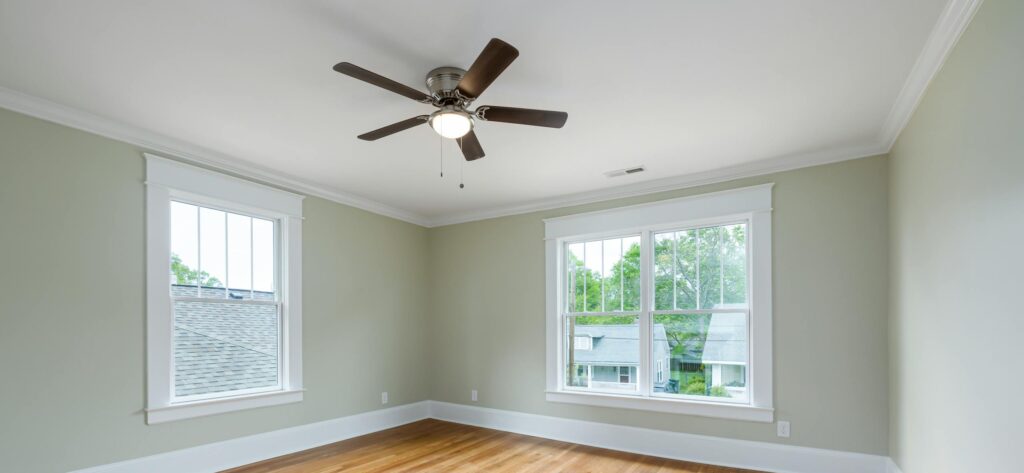
Mounting height keeps the fan effective and safe in every room. Blades should hang at least seven feet above the floor, and most experts aim for blades between eight and nine feet up for the best airflow. In a room with a standard eight foot ceiling, a flush mount fan keeps the blades at a safe height. In a room with a nine foot ceiling or higher, a downrod drops the fan into that ideal range so the breeze reaches the people in the room. The downrod length grows with the ceiling height, and tall vaulted ceilings may need a rod that is several feet long. Blade tips should also sit at least 18 inches away from the nearest wall so air can circulate freely. Getting both height and clearance right keeps the fan working as designed. A fan hung at the wrong height either stirs no air or sits too close for comfort.
Sloped and vaulted ceilings add another layer to the mounting job. A fan mounted on an angled ceiling needs a sloped ceiling adapter or a mount rated for that pitch, since a standard mount will sit crooked. The downrod and canopy must allow the fan to hang straight and level even on a steep slope. Beams, ductwork, and joists above the ceiling can also limit where a box can be placed. Our electricians check the framing and the ceiling angle before we set the box, so the fan hangs true. A level fan runs quieter, lasts longer, and avoids the annoying wobble that comes from a poor mount. We also confirm the bracing can carry the load on every type of ceiling. Proper mounting in every room is the difference between a fan that performs for years and one that fails early.
Ceiling Fan Wiring And Circuit Needs For Every Room
Wiring decides how you control your fan and how the light works on its own switch. A basic fan with a light kit usually needs a hot wire, a neutral wire, and a ground, plus a way to control both the fan and the light. To run the fan and the light from separate wall switches, the circuit needs an extra switched conductor, often described as three wire plus ground. Many older rooms only have wiring for a single light, so adding a fan with separate light control means running new wire. The ground connection is required by code and protects against shock if a fault occurs. Skipping the ground or reusing the wrong wires creates a hidden hazard inside your ceiling. Correct wiring is the foundation of a safe and useful ceiling fan. A clean wiring setup also makes future upgrades far simpler.
Rooms without an existing ceiling box present the biggest wiring challenge. Adding a fan where there was no fixture means running a new branch from a nearby source, cutting in a box, and adding a switch. This work involves opening parts of the ceiling or wall, fishing wire through framing, and connecting it to the panel circuit safely. The added load also needs to fit the capacity of the circuit so you do not overload it. In some homes, a dedicated circuit is the cleaner answer for several fans or a fan with heavy accessories. Running new wiring is skilled work that should follow code and local permit rules. A rushed wiring job can hide faults that surface as flickering, tripping, or worse. If your room needs fresh wiring for a fan, our electrical wiring service can run the lines safely; click here for our electrical wiring service.
Controls give you flexibility once the wiring is in place. A wall switch is the simplest option, while a fan and light combo switch lets you adjust each one on its own. Remote controls and smart wall controls add convenience, and they let you set speed and lighting from across the room or from your phone. Smart controls work best when the wiring includes a neutral at the switch, which many older boxes lack. Pull chains still work, but they wear over time and force you to reach the fan to make changes. Choosing the right control during installation saves you from rewiring later. Many homeowners also pair a fan light with the rest of their room lighting for a complete look, and our interior lighting installation service ties it all together. Click here for our interior lighting installation service to coordinate your fans and fixtures.
Ceiling Fan Installation Tips For Specific Rooms In Your Home
Every room in a home creates its own set of conditions for a ceiling fan. A bedroom values quiet operation, while a living room values strong airflow across a wide space. Kitchens deal with heat and grease, and bathrooms deal with moisture that can damage the wrong fan. Outdoor spaces face sun, rain, and humidity that indoor fans cannot handle. Choosing a fan rated for the room and mounting it correctly keeps it safe and effective for years. The wrong fan in a damp or wet location can corrode, short out, or fail an inspection. The tips below cover the rooms that need the most care during ceiling fan installation. Each space has a clear set of rules that keep the fan running well and the home safe.
Installing Ceiling Fans In Bedrooms And Living Rooms
Bedrooms reward a fan that runs quietly and moves gentle, steady air. A standard bedroom usually fits a fan with a 42 to 48 inch blade span, mounted close to the ceiling for safe clearance. A quiet motor matters most here, since fan noise can disturb sleep night after night. A reversible motor adds value, because it lets you run the fan counterclockwise in summer for a cooling downdraft and clockwise in winter to push warm air down. A remote or smart control lets you change speed without leaving the bed. Soft, dimmable light in the fan kit fits the calm mood of a bedroom. Mounting at the correct height keeps the blades safely overhead in a room with a low ceiling. The result is comfort that lasts through every season.
Living rooms call for stronger airflow because the space is larger and busier. A living room often needs a fan with a 52 to 56 inch span, and very large or open rooms may need a 60 inch fan or two units. A vaulted or tall ceiling here usually needs a downrod to bring the blades into the ideal range above the seating. Strong, even airflow keeps the whole room comfortable, from the couch to the far corners. A fan with a bright light kit can also serve as the main light source for the room. Matching the fan finish to your decor keeps the look clean and intentional. A quality motor handles long hours of daily use without humming or straining. The right living room fan handles both comfort and lighting in one fixture.
Both bedrooms and living rooms benefit from correct switch placement and control choices. A combo switch that separates the fan and the light gives you full control of comfort and brightness. Smart controls let you set schedules, so the fan turns on before you arrive or shuts off when you leave. Running the fan only when people are in the room saves energy, since fans cool people rather than empty rooms. Pairing the fan with the existing room lighting creates a balanced and finished space. A well planned control setup also makes the fan easier to use for everyone in the home. Our electricians handle the mounting, wiring, and controls so each room works the way you want. Comfort and easy control are the goals in these everyday living spaces.

Installing Ceiling Fans In Kitchens And Bathrooms
Kitchens handle heat from cooking, so a fan here helps clear warm, stale air. A medium kitchen often fits a 42 to 52 inch fan, depending on the open floor space and the ceiling height. Mount the fan clear of cabinets and away from the range hood so the blades have room to spin. Kitchens also collect grease and dust in the air, which can coat blades over time, so a fan that is easy to wipe down is a smart pick. Good clearance from upper cabinets keeps the fan safe and effective. A bright light in the fan kit adds useful task lighting over the space. Placing the fan in the center of the open floor spreads air across the whole room. A well placed kitchen fan keeps the room cooler and the air fresher while you cook.
Bathrooms add moisture to the picture, and moisture changes the fan you can safely install. A bathroom ceiling fan must be rated for damp locations so the motor and finish resist humidity. A standard indoor fan rated only for dry locations can corrode and fail in a steamy bathroom. The fan should also sit where a person in the tub or shower cannot reach it, which the code addresses for fixtures near water. Damp rated fans use sealed parts that stand up to the steady humidity of a bathroom. A small bathroom usually needs a compact fan with a 29 to 36 inch span. Mounting height still matters, so the blades stay clear and safe overhead. The right rating keeps the fan safe and extends its life in a wet environment.
Both kitchens and bathrooms involve water, heat, and code rules that demand careful work. Outlets and fixtures near sinks and tubs often require ground fault protection, and the fan circuit must respect those rules. Mounting the fan to a fan rated box is still required in these rooms, just as it is everywhere else. Proper venting in a bathroom is a separate system from the ceiling fan, and the two should not be confused. A licensed electrician knows which fan rating each room needs and how to wire it to code. Cutting corners in these rooms risks both safety and a failed inspection. The wrong choice here can mean replacing a fan only a year or two after it goes up. Our team installs the correct fan in each space and follows every code that applies.
Installing Ceiling Fans On Patios And Outdoor Rooms
Outdoor rooms and patios call for fans built to face the weather. A covered patio that stays dry under a roof needs a fan rated for damp locations at minimum. An open area exposed to rain and blowing moisture needs a fan rated for wet locations, since damp rated units cannot handle direct water. Indoor fans rated only for dry locations have no place outdoors, because they corrode quickly and create a hazard. Coastal humidity in Brazoria County puts extra strain on outdoor fans, so the right rating matters even more here. Sealed motors and rust resistant finishes give an outdoor fan a real chance to last. Salt air and storms can ruin an underrated fan in a single season. The correct rating is the single most important choice for any outdoor fan.
Outdoor mounting and wiring face conditions that indoor spaces never see. The fan still needs a fan rated box, and that box and its wiring must be protected from weather. Outdoor circuits often require ground fault protection and weather resistant materials to stay safe and pass inspection. Wind can stress an outdoor fan, so a sturdy mount and a quality motor help it hold up. A larger blade span moves more air across an open patio, which makes the space usable on hot, still days. Lighting on an outdoor fan should also carry the right rating for its location. A secure mount keeps the fan steady even when gusts pick up. Outdoor installs reward careful planning and weather ready parts.
Patios and outdoor rooms turn into comfortable spaces with the right fan in place. A well chosen outdoor fan keeps bugs moving along and pushes the heat off your skin during a Texas summer. Mounting height still matters, and the blades need safe clearance from the floor and from any walls or posts. The fan should tie into a properly protected outdoor circuit rather than a stretched extension from indoors. Our electricians install wet and damp rated fans on patios, porches, and covered outdoor rooms across the area. We handle the box, the wiring, and the controls so your outdoor space stays cool and safe. A properly installed outdoor fan adds real value to the time you spend outside. A reliable patio fan extends the hours you can enjoy being outdoors.
Why You Need A Professional For Ceiling Fan Installation
Ceiling fan installation looks simple from the ground, but the work behind the fan decides how safe and reliable it will be. The mount must support a moving load, the wiring must follow code, and each room has its own rules. A fan that is mounted to the wrong box or wired the wrong way can wobble, fail, or create a shock hazard. A licensed electrician handles the box, the circuit, the controls, and the inspection details in one visit. That protects your home and saves you from repeat repairs down the road. The sections below explain what a professional install gives you and why local homeowners trust our team.
How Professional Ceiling Fan Installation Protects Your Home
A professional install starts with the right mounting box for the load. We replace any standard light box with a fan rated box secured to the framing, so the fan stays put. We confirm the box, the bracing, and the downrod all match the fan and the ceiling. This step alone prevents the wobble and the fall risk that come from an unsupported fan. Proper mounting keeps the people below safe and the fan running smoothly. A solid mount is the first layer of protection in any room.
Correct wiring is the next layer of protection a professional brings. We verify the hot, neutral, and ground connections and confirm the fan has the control you want. We make sure the circuit can handle the added load without overloading. Ground fault protection is added where rooms near water require it. A proper connection removes the shock and fire risks that hide behind a rushed job. Code compliant wiring keeps your home safe long after the install is done.
A professional also matches the fan to the room and the local conditions. We check the size, the rating, and the mounting height so the fan fits the space and the climate. Damp and wet rated fans go in the rooms that need them, and dry rated fans stay indoors. We balance the fan so it runs quiet and even from day one. The result is a fan that performs as promised and lasts for years. That long term value is what a professional install is built to deliver.

What To Expect From Our Ceiling Fan Installation Service
Our ceiling fan installation service starts with a clear look at your space. We measure the room, check the ceiling height, and inspect the existing box and wiring. We talk through fan size, controls, and any new wiring the job may need. You learn your options and the cost before any work begins, with full transparency. We waive our diagnostic fee when you choose us to handle the work. There are no surprises and no pressure during the process.
Once you approve the plan, our electricians handle the full install. We set the fan rated box, run any needed wiring, and mount the fan level and secure. We wire the controls you chose, from a simple switch to a smart control. We test the fan on every speed and check the light and the balance. We clean up the work area and walk you through how the fan and controls work. The fan is ready to use the day we finish.
We back the work with a lifetime craftsmanship warranty on every job. Our license number is 748217, so you know trained professionals are handling your home. We give honest recommendations without upsells or pressure, because we want to be your electrician for life. When you call, you reach a real person on our local team rather than an automated system. We serve Angleton and Brazoria County every day, so help is close by. That mix of skill, honesty, and local service is what you can expect from us.
Why Choose Schultz Family Electric For Ceiling Fan Installation
Schultz Family Electric is built on small town values and steady local service. We are based in Angleton and serve Brazoria County daily, which means faster response times for you. We know the homes, the climate, and the common electrical needs in this area. That local familiarity helps us recommend the right fan and the right setup the first time. Our roots here keep us focused on long term relationships with our neighbors. We want to be the electrician you call for years, not just for a single day.
Trust drives everything we do, from the first call to the final test. We waive the diagnostic fee when you choose us for the repair or install. You get honest options and quality work with no upsells and no pressure. Our lifetime craftsmanship warranty stands behind every fan we hang. A real person answers when you call, ready to help with direct, knowledgeable support. That blend of honesty and care is the heart of our service.
Choosing us means choosing licensed, careful work for every room in your home. We install fans in bedrooms, living rooms, kitchens, bathrooms, patios, and more, each with the correct rating and mount. Our team follows code on every job and treats your home with respect. Ready to stay cool this summer with new ceiling fans installed the right way? Click here for our ceiling fan installation service or call us today at (979) 264-9024. We are ready to help you bring comfortable, reliable airflow to every room.